


Wuri Lin Shin Hospital
Director of Surgical Department, specializing in Neurosurgery Dr. Chung Wei-An Doctor
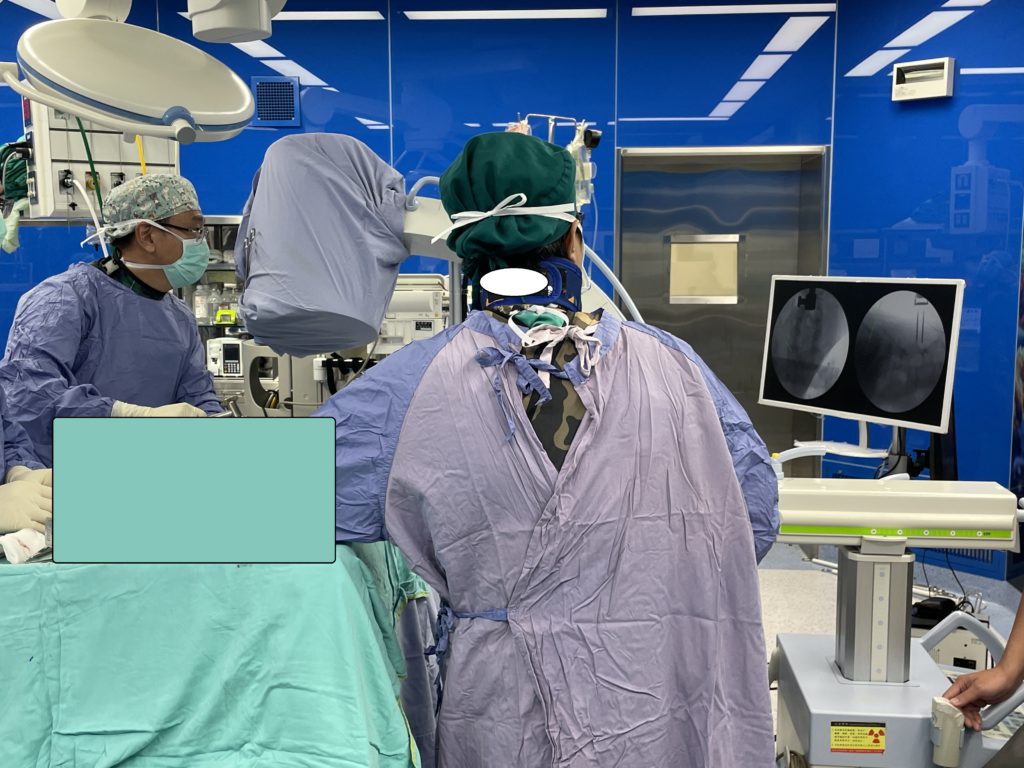
Minimally invasive spinal surgery requires utmost precision, accuracy, and concentration. Typically, it involves securing implants on critical areas of the spine without damaging nerves and blood vessels. Because precise positioning of implants is crucial for patients' optimal recovery, surgeons traditionally relied on extensive X-ray exposure using the commonly used C-arm during surgery to achieve accurate placement.
Wuri Lin Shin Hospital introduces the latest advancement in spinal computer navigation, eliminating the need for preoperative CT scans.
We're all aware that radiation poses certain risks to the human body, especially considering that the dose from a CT scan is equivalent to hundreds of chest X-rays and carries a risk of cancer.1「According to a study reported by Consumer Reports in the United States, computed tomography (CT) imaging radiation may lead to approximately 29,000 cases of cancer annually in the country, with women accounting for two-thirds of the cases.」However, most computer-assisted spinal surgery navigation devices, both domestically and internationally, typically require patients to undergo preoperative computed tomography (CT) scans. Consequently, this exposes patients to radiation before surgery, and during surgery, additional radiation exposure is required for C-arm assistance, resulting in a certain degree of radiation exposure risk.
Recently,Wuri Lin Shin Hospitalusing the AR technology developed bySURGLASSESThe developed technology that eliminates the need for preoperative CT scans is at the forefront of innovation.Caduceus SThe advanced products of orthopedic computer navigation systems allow for precise positioning and accurate computer-assisted spinal surgery without the need for preoperative computed tomography (CT) scans. During surgery, the system achieves precise navigation with minimal C-arm radiation exposure, typically requiring only 2-4 images with the lowest radiation dose.
This newly developed spinal computer-assisted navigation system provides the spinal structures required for surgery with minimal C-arm radiation exposure. It accurately guides surgical instruments to the specified location, addressing the shortcomings of requiring preoperative CT scans. It allows for real-time localization of the operative site, thereby reducing surgical incisions, lowering surgical risks, and shortening surgical durations. Dr. Chung Wei-An stated, "In addressing spinal surgery challenges, besides ensuring safety, we also need to consider the patients' well-being. By reducing radiation doses while ensuring precise and safe surgeries, our goal is to achieve excellent patient recovery."
Case Report:
A 65-year-old female presented with lumbar spinal stenosis and nerve compression due to spondylolisthesis from the fourth lumbar vertebra to the first sacral vertebra. After clinical and imaging examinations confirmed the diagnosis, she required spinal decompression and fusion surgery. Seeking treatment at Wuri Lin Shin Hospital, she underwent surgery utilizing the latest computer navigation system without the need for preoperative CT scans. Her postoperative condition was excellent, and she was able to mobilize with a back brace on the third day after surgery.
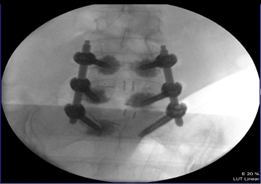
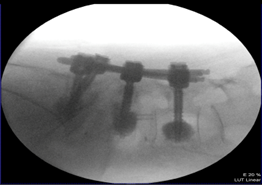
Image: Spinal Computer-Assisted Surgery Navigation